Kareel® — AMA Herbal
Natural Dye & Mordant
for Cotton & Textile Industry
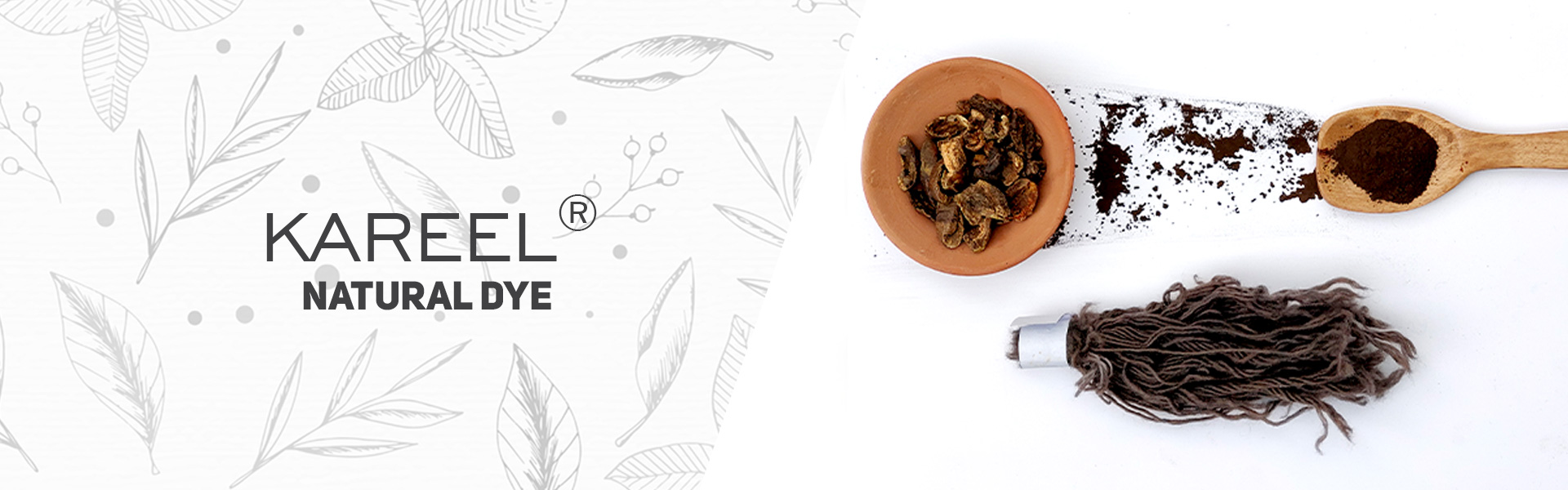
Kareel® is a natural dye and natural mordant derived from Terminalia chebula (Myrobalan fruit). It produces greenish-yellow, khaki, and grey shades on cotton and plant fibres, and is manufactured in India for bulk supply to textile mills, dyeing houses, and garment processors.
Reading
Common NameMyrobalan
SourceTerminalia chebula
Shade RangeGreenish-Yellow / Khaki / Grey
Suitable forCotton, Plant Fibres
Overview
Kareel® — Natural Dye & Mordant from Terminalia Chebula, Developed for Industrial Dyeing
Myrobalan Dye & Natural Mordant for Cotton — Bulk Supply from India
AMA Herbal manufactures and exports natural textile dyes from Lucknow, India, and has been working with mills and dyeing houses since 1996. Kareel® is the company's natural dye and natural mordant, produced from Terminalia chebula — the Myrobalan fruit — which has historically been used across South Asia both to dye cotton and to prepare fibre ahead of a second natural dye. The extract works on cotton and plant fibres, and is produced at a scale that supports regular bulk orders.
As a natural dye manufacturer in India, AMA Herbal processes each batch under controlled conditions and provides technical data sheets, shade references, and application guidance for dyeing houses evaluating Kareel® for the first time. See also Bee® — a catechu-based natural brown dye also available from AMA Herbal.
For textile mills and garment manufacturers sourcing natural dyes and mordants for bulk production, Kareel® is available with standard export documentation, consistent shade batches, and direct technical support from the production team. AMA Herbal also assists with shade development and small-batch sampling before mills commit to larger orders.
"Terminalia chebula has been used in dyeing and mordanting across the subcontinent for centuries. Kareel® is our effort to make that same source material available to modern mills — consistently processed, properly documented, and export-ready — without the inconsistencies that have historically made natural dyes difficult to work with at scale."
AMA Herbal — Natural Dye Manufacturer, India, since 1996Raw Material
Source: Terminalia chebula — Myrobalan Fruit
Kareel® is derived from Terminalia chebula — the Myrobalan fruit — which is naturally high in tannin, the compound responsible for both its dyeing behaviour and its mordanting action. The dye performs well on cotton and other plant-based fibres, where tannin binds readily to cellulose. Used on its own, Kareel produces greenish-yellow, khaki, and grey shades; used as a pre-treatment, it improves colour uptake and fastness for a second natural dye applied afterward.
AMA Herbal sources Terminalia chebula fruit domestically and processes it through a consistent extraction and refining sequence. Each production batch is checked for tannin content and shade consistency before dispatch, and reference shade cards are available for mills comparing batches or running shade approvals.
No Synthetic Inputs
Biodegradable
Batch Traceable
Industrial Grade
Export Documentation Available
Applications
Suitable for Cotton & Plant Fibres — Dyeing and Mordanting
Kareel® is used in dyeing houses and fabric processors working with cotton and plant-based fibres. It is compatible with the main industrial application methods and does not require special equipment beyond what mills already use for other natural dyes. Shade depth depends on fibre preparation, mordant, and process conditions.
| Fibre / Substrate | Notes |
|---|---|
| Cotton | Primary substrate; strong tannin affinity gives consistent greenish-yellow and khaki shades |
| Plant Fibres | Good uptake on cellulosic plant fibres with comparable binding behaviour to cotton |
| Woven Fabric & Yarn | Suitable for fabric roll and hank-form yarn dyeing ahead of weaving or knitting |
| Synthetic Fibres | Not suitable — polyester and nylon lack the tannin-binding sites Kareel requires |
Kareel® — Shade Range (Indicative)
Process
Dyeing & Printing Methods — Nimbus® is Compatible With
Nimbus® can be used across the main textile application processes: garment dyeing, fabric dyeing, yarn dyeing, and fabric printing. Application guidance and process sheets are available on request.
- 01
Garment Dyeing
Used on finished cotton, silk, and wool garments to achieve crimson and burgundy shades. Suitable for both over-dyeing and direct dyeing of undyed goods.
- 02
Jigger & Fabric Dyeing
Applied to fabric in roll form on jigger machines. Consistent shade coverage across fabric widths; suitable for pre-production yardage dyeing.
- 03
Yarn Dyeing (Hank Form)
Wool and cotton yarn dyed in hank form prior to weaving or knitting. Used by mills producing striped, checked, or yarn-dyed woven fabrics.
- 04
Fabric Printing
Suitable for flat screen, rotary printing, and block printing. Also used in knife-coated and hand-applied printing for artisan and small-batch production.
Product Properties
Key Properties of Nimbus® Natural Red Dye
Crimson & Burgundy Shades
Produces deep red shades — crimson, burgundy, and wine red — on cotton, silk, and wool. Shade depth varies by fibre type and mordant used.
No Synthetic Chemicals
Derived entirely from Kerria lacca. Does not contain azo compounds, petrochemical carriers, or synthetic fixing agents.
Biodegradable
The dye breaks down naturally and does not contribute persistent chemical load to wastewater. Relevant for mills working under reduced-effluent or GOTS-aligned programmes.
Bulk Supply & Export
Available in production quantities with consistent batch quality. Export documentation, MSDS, and shade references can be provided to overseas buyers.
Background
What is Natural Red Dye for Fabric?
Natural Red Dye — a Brief Overview
Natural red dyes for textile use are colorants extracted from biological sources — insects, plant roots, or bark — that produce red and crimson shades on fabric without synthetic chemistry. Historically, the main sources have been lac (Kerria lacca), madder root (Rubia tinctorum), and some botanical extracts. They are used as alternatives to synthetic azo red dyes in applications where brands or mills are working to reduce chemical inputs, meet eco-certification criteria, or respond to buyer requirements for natural-origin products.
Nimbus® is AMA Herbal's lac-based red, extracted from Kerria lacca. For madder-based red, see Rubia® natural red dye. Both are available for evaluation and bulk supply.
Further Reading
Related Natural Dye Resources
Natural Dye Manufacturer in India
Bulk natural textile dye manufacturer and exporter from India.
Read moreWhat Are Natural Textile Dyes
Learn about natural textile dye sources and applications.
Read moreBio Indigo Natural Dye
Natural indigo dye for denim and textile mills, manufactured and exported by AMA Herbal.
View productGarment Dyeing
Natural dye applications for garment dyeing.
View detailsContact AMA Herbal
Request samples, pricing, and technical details.
Get in touchManufacturing
Manufacturing Expertise Behind Nimbus®
AMA Herbal has been manufacturing natural dyes since 1996, working from its own production facility in Lucknow, India. Nimbus® draws on that history — sourcing Kerria lacca from established domestic suppliers, then running it through a consistent extraction and refining sequence rather than a one-off process that varies batch to batch.
Production controls matter more than the raw material itself in a category like lac dye, where natural variation in the source stick can otherwise show up as shade drift. Our team checks each batch against reference shade cards before it's approved for dispatch, and keeps records so a mill reordering months later can expect the same result they got the first time.
Laboratory validation happens before larger runs — new mills evaluating Nimbus® typically start with a lab sample and application trial on their own equipment, which is where mordanting and pre-treatment questions for cotton usually get resolved. Our technical team works through that process directly rather than leaving it to a distributor.
For bulk orders, the same production line that runs sampling also handles industrial volume, so the shade a mill approves at sample stage is the shade they receive at scale. Export documentation is prepared alongside production, not as an afterthought.
Why Trust AMA Herbal
Why Textile Manufacturers Trust AMA Herbal
Mills and dyeing houses that source Nimbus® tend to point to the same handful of reasons when asked why they keep reordering.
Manufacturing Since 1996
AMA Herbal has operated as a natural dye manufacturer in Lucknow, India, for close to three decades.
Nearly 30 Years of Experience
Long-running relationships with mills and dyeing houses across India and export markets.
Industrial Natural Dye Manufacturing
Production capacity built for bulk mill orders, not just sample or small-batch runs.
Technical Dyeing Support
Direct guidance on mordanting, application, and process conditions from the production team.
Batch Consistency
Each batch is checked against reference shade cards before it is approved for dispatch.
Export Documentation
Standard export paperwork, MSDS, and shade references prepared for overseas buyers.
Quality Assurance
Internal checks apply across sourcing, extraction, and finished dye output.
Sustainable Manufacturing
Biodegradable output with no synthetic petrochemical inputs in the dye itself.
Source Nimbus® Natural Red Dye for Your Textile Business
AMA Herbal supplies Nimbus® to textile mills, dyeing houses, garment manufacturers, and fabric processors. The team can assist with lab sampling, shade development, bulk pricing, and export arrangements. Use the contact form or WhatsApp to get in touch directly.
Content Review
Content Reviewed by AMA Herbal Technical Team
Reviewed by AMA Herbal Technical Team
This page is checked and kept current by AMA Herbal's own technical staff — natural dye specialists and textile application experts who work with Nimbus® in production, not outside content writers. Product details, shade information, and application guidance are reviewed against current manufacturing knowledge and updated regularly.
Last Updated: